Fatawa Darul Uloom Zakariyya
The official searchable online edition of a South African seminary's fatwa collection, readable in Urdu, Arabic and English.
Visit fduz.org- Role
- Co-lead developer, with Makeen Majlis
- Year
- 2026
- Platforms
- Web
- Technology
- Next.js, PostgreSQL, Hybrid search, Docker
Inside the interface.
A closer look at the live product. Switch between views to explore the details.
The problem
Decades of rulings existed only as printed Urdu volumes. Readers needed to find an answer by asking in their own words and their own language.
What I worked on
Makeen and I co-led the project from the original digitisation idea and early Word documents through to the current platform. Makeen proposed the AI search. My work also includes the multilingual front end, page transitions, and the About page.
- Jointly initiating the digitisation project and preparing the Word documents
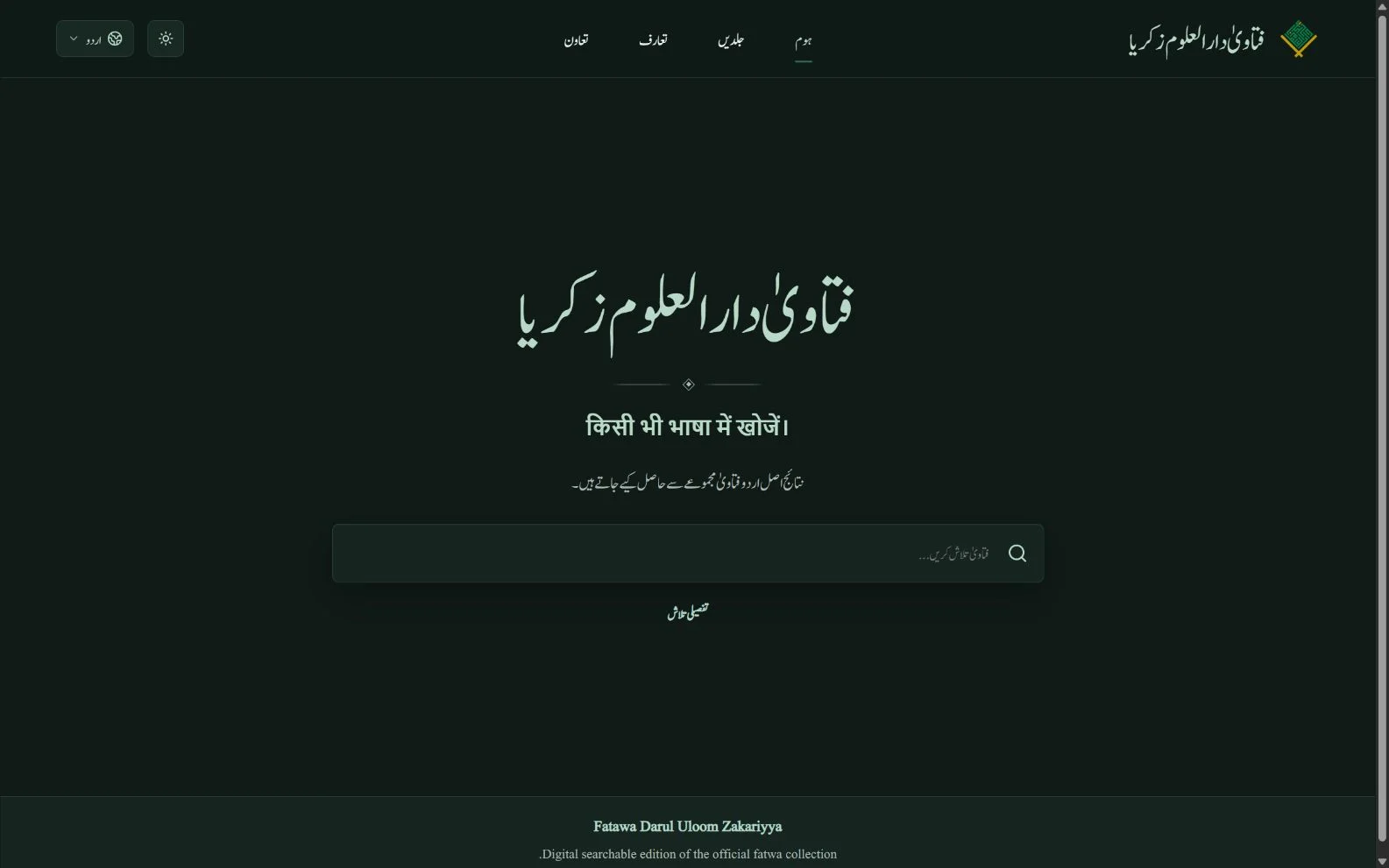
- The Urdu and Arabic interface mode, with right-to-left layout
- A rotating hero line that greets readers in many languages
- Page transitions and the About page
Design in the details
Make the layout follow the language
Urdu and Arabic need more than translated labels. Navigation, search controls, reading direction, and spacing must work together so the interface feels coherent from right to left.
Give the collection context
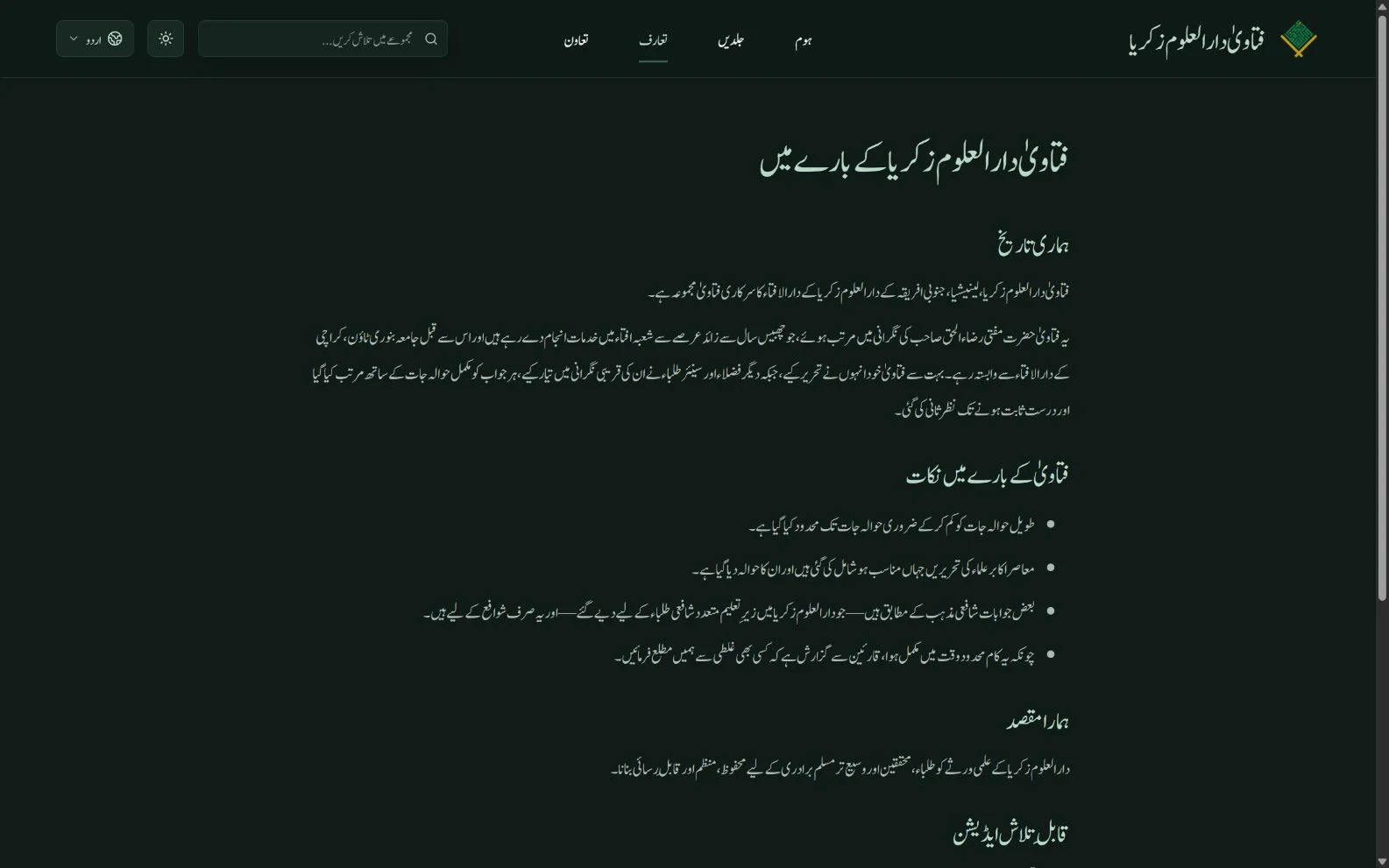
The About page explains the institution, the source material, and the purpose of the searchable edition. That context helps a reader understand what they are searching and where the material comes from.
Under the hood
Search in any language
The AI search concept came from Makeen. A question asked in English, Bengali or Arabic finds the matching ruling in the original Urdu, blending meaning-based and exact-phrase search.
The experience
One collection, a more familiar interface.
Readers can use the collection through English, Urdu, and Arabic interfaces. My work makes navigation and supporting content adapt to the language they choose.